
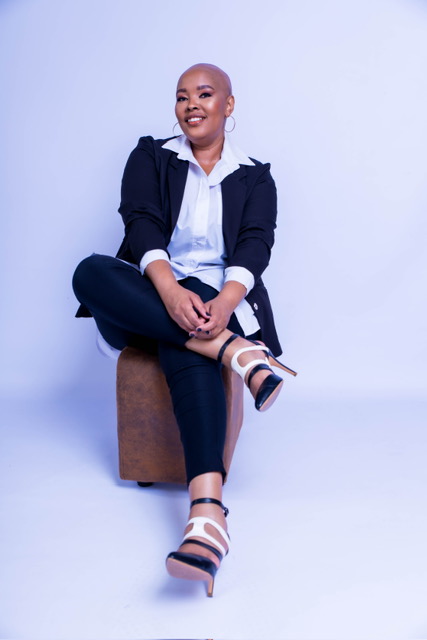
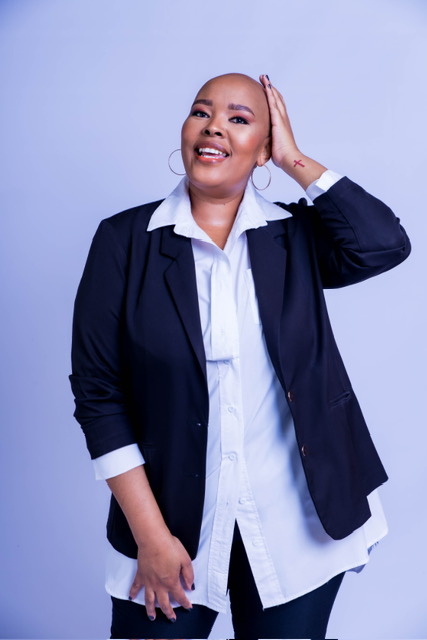
Motshabi Malatsi on alopecia, identity, femininity and turning personal pain into a movement of purpose
Motshabi’s life is made up of many roles, yet she does not see them as separate identities. Motherhood has taught her responsibility, patience and a love that reminds he Who are you when the world can no longer recognise you by the image it expects to see? It is a question that sits at the heart of Motshabi Malatsi’s journey. For years, hair was part of the image she recognised in the mirror — part of how she expressed beauty, femininity and identity. When alopecia began changing that image, the loss was not merely physical. It challenged her confidence, her sense of self and the way she believed the world saw her.
Today, however, Motshabi speaks from a very different place. She is a mother, corporate professional, entrepreneur, speaker and an Alopecia Voice. She is also the founder of the MO•PECIA Alopecia Awareness Campaign. But beyond every title, she describes herself first as deeply human — a woman who has learned that resilience does not always have to be loud, that vulnerability does not equal weakness and that identity cannot be built on the approval of others.
“I am not the image people recognise,” she says. “I am the woman underneath it. I am my character. My values. My resilience. My kindness. My experiences.”
The woman beyond the titles
“I can be ambitious and vulnerable. I can be a leader and still have moments of uncertainty,” she says. “I can be successful professionally and still be figuring parts of myself out.”
Before alopecia became part of her story, Motshabi had always imagined a future connected to creativity, entertainment and beauty. She studied PR and Events, but she also taught herself how to do hair, nails and makeup. She dreamed of one day owning her own beauty bar. Beauty was something she enjoyed and understood. She could never have imagined that one of the most profound journeys of her life would force her to reconsider what beauty meant to her personally.
Away from the public voice and professional roles, Motshabi describes herself as something of a homebody. Her bubbly personality and earlier years of enjoying social life may lead people to assume that she is always out and about, but she values her space and enjoys being at home. It is another reminder that there is always more to a person than the image people create of them.
When hair loss became impossible to ignore
Motshabi first began experiencing hair loss more than ten years ago. Her hair, once thick and beautiful, started thinning. Eventually, a small bald patch appeared. Because androgenetic alopecia existed within her family, the possibility was not entirely unfamiliar. Deep down, she knew that one day the condition might affect her too.
Initially, she wondered whether the thinning was caused by braids, ponytails or other hairstyles. She hoped it would grow back. But as the patch remained, the reality became more difficult to avoid. “The bald patch was my confirmation that it was more than hair loss,” she recalls.
For some time, she did not even have the terminology to explain what was happening. She began researching and eventually visited a hair clinic, where she was told she had alopecia. Although she was given information and told that help was available, treatment was expensive and beyond what she could afford at the time.
Yet the diagnosis was only one part of the experience. The emotional impact would prove far more complicated. “The mirror became my worst nightmare,” she says. “I cried every time I looked in the mirror because I felt my beauty fading away.”
In a society where women are often told that their hair is their crown, the experience felt like more than losing hair. Her confidence and self-esteem dropped dramatically. She struggled to recognise herself and became guarded, emotional and withdrawn. The question was not simply how she would live without hair. It was how she would continue recognising herself as the woman she had always believed herself to be.
Learning to meet herself again
For a long time, Motshabi tried to navigate the journey privately. Her family understood because some of them had experienced similar struggles. Two close friends also knew and supported her. In professional spaces, however, she did not speak openly about alopecia until much later.
Wigs became one of the ways she managed the changing image in the mirror. She began making wigs for herself and eventually turned that interest into a wig business. Wearing a wig made it easier to face the world again, particularly as wigs became increasingly common as a form of beauty and self-expression.
But outward confidence did not always mean inner acceptance. There were moments when wearing a wig felt performative. She was careful, self-conscious and constantly aware of how people might react. She worried about being stared at, rejected or mocked. She worried about whether she would be loved for who she was rather than for the hair she no longer had.
The journey towards acceptance took more than eight years. One of the most important turning points came when Motshabi cut her hair and went bald. She took photographs and posted them without explanation. Initially, she admits, she may have been looking for people’s reactions and approval. But something unexpected happened: she began seeing herself differently.
Slowly, she started walking around her home without hair. She began noticing the beauty that other people had been telling her was still there. Therapy became another important part of her healing, helping her improve her relationship with herself and preparing her to deal with the vulnerability of becoming more public about her experience.
Acceptance, she discovered, was not a single dramatic moment. It was a process — sometimes difficult, sometimes empowering and always deeply personal.
Beyond the mirror
The phrase “Beyond the Mirror” captures the essence of Motshabi’s message. For her, it means learning to see herself beyond what is physically reflected back. Alopecia challenged the image she had of herself, but it also pushed her to discover an identity beyond hair, appearance and other people’s perceptions.
“The mirror shows you what you look like. It doesn’t show you who you are,” she says.
Today, when Motshabi looks in the mirror, she sees more than what she once believed she had lost. She sees resilience, strength and a woman who has learned to separate her worth from her appearance. She is careful not to romanticise the journey. Acceptance does not mean that difficult feelings disappear. There are still moments when it is challenging. The difference is that her reflection no longer has the power to determine how she feels about herself.
Her experience has also made her question society’s traditional definition of a beautiful woman. Women are constantly given messages about how they should look, dress, age and carry themselves. Hair, body shape, skin and appearance are often treated as measures of femininity and value. Social media has intensified many of those pressures.
Alopecia forced Motshabi to ask why hair should determine whether a woman feels beautiful, feminine or worthy. Today, she defines beauty much more broadly. Beauty, for her, is authenticity. It is how she carries herself, how she loves, how she treats people and how comfortable she is with the woman she is becoming.
“Beauty today is being able to say, ‘This is me,’ without feeling the need to apologise or explain what I look like,” she says.
Her definition of femininity has changed too. It is not dependent on a particular image. Femininity can exist in strength and softness, confidence and vulnerability. It is, in her words, being fully comfortable with who she is as a woman and being unapologetically herself.
Bald, bold and free to choose
One of the strongest messages in Motshabi’s advocacy is the importance of choice. She embraces different forms of self-expression, including makeup, skincare, wigs and her natural bald appearance. She refuses to accept the idea that one choice is more authentic than another.
Some days, she wants to wear a wig and feel glamorous. On other days, she is comfortable showing her bald head. Neither choice makes her less authentic, and neither should be interpreted as proof that she has or has not accepted alopecia.
“A wig can simply be a choice — just like makeup, clothes or skincare,” she explains.
This perspective challenges another form of pressure placed on women living with alopecia: the expectation that they must prove acceptance by always being visibly bald. Motshabi believes no woman should feel pressured to wear a wig, but equally, no woman should be judged for choosing one. True acceptance is not about proving anything to anyone. It is about freedom.
For Motshabi, being “bald and bold” means having the courage to show up exactly as she is, without feeling the need to hide or explain herself. It means choosing confidence over fear and knowing that beauty, femininity and power were never dependent on having hair.
Her confidence has evolved over time. It no longer depends primarily on how she looks or how she thinks others see her. “Confidence isn’t about feeling good every single day,” she says. “It’s about knowing my worth even on the days when I don’t feel my best.”
From pain to purpose: the birth of MO•PECIA
At some point, Motshabi realised that her experience was not hers alone. Many people were quietly living with alopecia, navigating the emotional impact without support or open conversation. The more she understood her own journey, the more she felt a responsibility to speak about the issues that often remain hidden: identity, confidence, self-acceptance, emotional wellbeing and the need for meaningful support.
That realisation led to the creation of MO•PECIA Alopecia Awareness Campaign. The name has a personal and playful origin. A friend once started calling Motshabi “molopecia” when she began speaking about her journey. She adapted it, combining the first letters of her name with alopecia. What began as a personal reference became the name of a growing movement.
MO•PECIA was created to do more than simply tell people that alopecia exists. Its mission is to create awareness, educate and provide support while changing the conversation around the condition.
Instead of asking only, “What happened to your hair?”, Motshabi wants people to ask a deeper question: “How are you coping, and how can we support you?”
She believes one of the biggest gaps in South Africa is that alopecia is simply not discussed enough. Because it is not generally understood as life-threatening, the emotional and psychological consequences can sometimes be dismissed. People may have access to information online or through medical professionals, but safe spaces, peer support and reliable, accessible information remain important needs.
“Don’t reduce alopecia to hair,” she says. “Ask the person how they are doing.”
The message is simple but powerful. A person living with alopecia may look perfectly fine to everyone else while privately dealing with uncertainty, grief and self-consciousness. Sometimes they do not need someone to fix anything. They simply need to feel seen.
The power of being seen
One of the most rewarding parts of Motshabi’s advocacy has been hearing from people whose lives have been touched by her willingness to speak openly. She receives messages daily from individuals who say her story has given them courage to walk outside without fear, seek medical help or become more open with the people in their lives.
One memorable encounter happened in a shopping mall, when a bald woman approached Motshabi and hugged her before saying anything. The moment needed little explanation. Their shared appearance immediately created a sense of recognition and community.
For Motshabi, representation matters because seeing someone who looks like you can change what you believe is possible. A person living with alopecia who sees someone confidently speaking, working, leading and living openly may begin to feel less isolated.
Representation also challenges society’s picture of what beauty, femininity and confidence are supposed to look like. Sometimes, she believes, seeing someone else embrace their reality gives you permission to begin embracing your own.
A vision bigger than one woman
Motshabi’s vision for MO•PECIA extends far beyond social media. Over the next five years, she hopes the campaign will grow into a recognised and trusted voice for alopecia awareness across South Africa and eventually the African continent.
The movement is developing initiatives focused on education, awareness and support beyond the hair. These include accessible information, conversations about the emotional impact of hair loss and spaces where people can connect and share their experiences. Motshabi is also looking towards collaborations and community-based initiatives that can take the conversation into schools, workplaces and broader communities.
Her planned awareness events will bring together education, personal stories, professionals and people living with alopecia. The goal is to create welcoming spaces where people can ask questions, learn about diagnosis and treatment, discuss confidence and identity, and understand the emotional impact of the condition.
Her ideal support ecosystem would recognise the whole person. It would bring together medical care, psychological support, reliable information and peer connection. It would also involve families, schools, workplaces and communities, because the journey does not exist only inside a doctor’s office.
Motshabi hopes to build meaningful partnerships with healthcare professionals, corporates, beauty and wellness brands, government and other organisations. But she is clear that she is looking for more than logos attached to a campaign. She wants collaborations that create sustainable impact and genuinely change the way alopecia is understood and supported.
Ultimately, her biggest dream is for MO•PECIA to become bigger than her own story — a movement that continues to create understanding, representation and hope long after she is no longer its central voice.
The legacy of acceptance
Motshabi’s journey has also shaped how she shows up as a mother and professional. In the workplace, alopecia has taught her to be more authentic. There was a time when she worried about how people might perceive her appearance. Today, she walks into professional spaces knowing that her competence, leadership and contribution are not determined by her hair.
Being the only visibly bald woman in a room can still make her aware of herself, but she now focuses on why she is there and what she brings. Sometimes, she sees her presence as an opportunity to challenge what people believe confidence, beauty and professionalism should look like.
Motherhood has deepened these lessons. She wants her son to understand that worth is not determined by appearance or by the opinions of others. She wants him to see that a person can go through difficult experiences without allowing those experiences to define their possibilities.
“Self-acceptance is not just something I do for myself,” she says. “It’s also part of the legacy I want to leave for my child.”
That legacy extends to every woman — and every person — who is still learning to accept themselves. Motshabi believes empowerment does not require perfection. You can still be healing. You can still have insecurities. You can still be a work in progress and be powerful at the same time.
She believes women need to stop apologising for taking up space, having ambitions, setting boundaries and choosing themselves. They should not have to apologise for how they look or for failing to fit someone else’s definition of womanhood.
Her own greatest lesson has been acceptance. Alopecia has taught her resilience. The woman she is becoming, she says, is unapologetic.
Beyond the hair, beyond the fear
If there is one thing Motshabi wishes every South African understood about alopecia, it is that it is more than hair loss. Behind the visible change may be a person dealing with questions about identity, confidence, femininity, self-esteem and emotional wellbeing.
Everyone’s journey is different. Some people seek treatment. Some wear wigs. Some embrace their baldness. Some move between all of those choices at different stages. There is no single correct way to live with alopecia.
Her message to society is therefore one of empathy: before commenting on someone’s hair, pause and see the person first.
For parents whose children are diagnosed with alopecia, she encourages love, patience and emotional support. For schools, she advocates education, inclusion and strong responses to bullying. For workplaces, she calls for environments where people are judged on their skills and performance rather than visible changes in appearance.
And for the young girl — or boy — who is afraid to leave home or go to school because of hair loss, her message is gentle: there is nothing wrong with you. Your hair may be changing, but you have not changed. You remain beautiful, intelligent, special and worthy of friendship and kindness.
Perhaps that is the most powerful lesson in Motshabi Malatsi’s story. Alopecia changed her reflection, but it did not take away the woman she was. Instead, through pain, fear, therapy, vulnerability and courage, she discovered a deeper version of herself.
She no longer asks the mirror to tell her who she is.
And in sharing that journey, she is helping others look beyond theirs too.
“Your reflection may have changed, but your worth and your beauty have not.” — Motshabi Malatsi